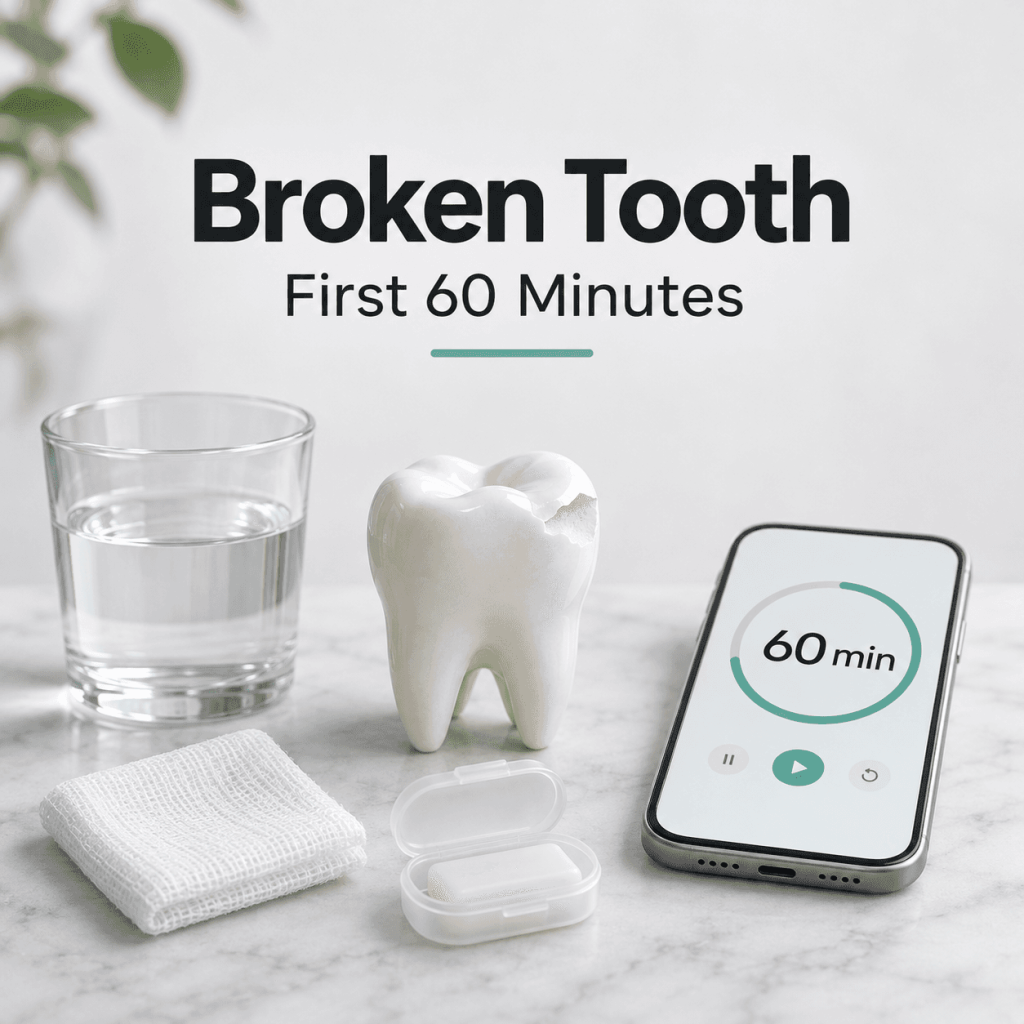
The good news is you usually have a short window where you can make things a lot better. Less pain, less damage, better chance of saving the tooth, and honestly just less stress later.
This is what to do in the first hour.

First, figure out what kind of “broken” this is
Not all broken teeth are the same, and the first few minutes are mostly about doing a quick reality check.
You might be dealing with:
- A small chip (no pain, just a rough edge)
- A larger fracture (pain when breathing in, biting, or drinking)
- A broken filling or crown (feels hollow or sharp)
- A tooth cracked down into the root (pain on bite, sometimes no obvious missing piece)
- A full break with bleeding or exposed nerve (often intense pain)
If there is heavy bleeding that will not slow, facial trauma, trouble breathing, or you think your jaw is broken, skip the rest and go to urgent medical care.
For everything else, start here.
Minute 0 to 5: Stop what you are doing and protect the area
1) Rinse gently
Use warm water and swish gently to clear blood, grit, or food. Don’t aggressively swish if you are bleeding. Just enough to clear the mouth.
2) Do not keep chewing on that side
Even if it “feels okay.” A cracked tooth can split more with one hard bite.
3) If you have bleeding, apply pressure
Fold clean gauze or a clean cloth and bite down gently for 10 minutes.
4) If the tooth is sharp and cutting your tongue or cheek
Use:
- Dental wax (best)
- Or sugar free chewing gum (in a pinch)
- Or a small piece of gauze as a temporary barrier
Do not use glue, household cement, or anything like that. Tempting, but no.
Minute 5 to 15: Find the broken piece (and store it properly)
If you can locate the fragment, pick it up and keep it.
How to store it
- Put it in a clean container with milk, saline, or your saliva (inside your cheek works if you have nothing else).
- If it is dirty, rinse it quickly with water. Do not scrub it.
Sometimes the dentist can reattach a fragment, and even when they can’t, having it helps them assess the break.
Minute 15 to 30: Reduce swelling and manage pain safely
Cold compress
If there is swelling or throbbing, place a cold pack on the cheek:
- 10 minutes on, 10 minutes off
- Do not apply ice directly to gums or tooth
Pain relief
If you can take them safely (and you have no medical reason not to), over the counter meds can help:
- Acetaminophen (Tylenol) is usually gentle on the stomach.
- Ibuprofen (Advil) helps with inflammation.
Avoid aspirin placed on the gum. That old trick can burn tissue.
If the tooth is sensitive to air and water
This is often a sign the inner tooth is exposed. Keep your mouth closed when breathing outside, avoid hot and cold drinks, and do not test it repeatedly. People do this. I get it. But it makes it worse.
Minute 30 to 45: Do a quick checklist (this helps when you call)
Before you call a dental clinic, take 60 seconds and note:
- Is pain mild, moderate, or severe?
- Is the tooth loose?
- Is there visible pink or red in the center of the tooth (possible nerve exposure)?
- Do you have swelling in the gum or face?
- Did the break happen from biting something, or from an accident?
- Do you have a crown, large filling, or root canal on that tooth already?
These details help the dental team triage you properly.
Minute 45 to 60: Call for an emergency dental appointment
A broken tooth is one of those things where “waiting a couple days” can turn a simple fix into something bigger.
If you are in Calgary and can be seen quickly, Sunnyside Smiles offers same day appointments when possible for urgent issues like pain, infection, or dental emergencies. You can start here: https://sunnysidesmiles.ca/
Even if you are unsure how bad it is, call. A cracked tooth can look small but run deep.
These are the big ones that make things worse:
Do not ignore it because the pain went away
Pain can fade if the nerve is damaged. That is not a win.
Do not chew on it “carefully”
A cracked cusp can shear off and expose the nerve fast.
Do not use superglue or DIY filling kits as a permanent fix
Temporary dental cement from a pharmacy can be okay for short term coverage, but it is not a substitute for treatment. And glue is just… no.
Do not brush aggressively right over the break
Keep the area clean, yes. Just be gentle.
Treatment depends on how deep the fracture goes. Common options include:
Minor chip
- Smoothing/polishing the edge
- Bonding to restore shape
Larger break without nerve exposure
- Filling or bonding
- Sometimes a dental crown if the tooth is weakened
Nerve involvement or deep crack
- Root canal treatment to remove infected or inflamed pulp and save the tooth
- Then usually a crown for protection
Tooth can’t be saved
Sometimes fractures extend too far below the gumline. In that case:
- Tooth extraction
- Replacement options like dental implants, a bridge, or dentures depending on the situation
Sunnyside Smiles provides restorative care like fillings, crowns, root canal treatment, extractions, and tooth replacement options including dental implants, so if your broken tooth turns into a bigger plan, it can typically be handled in one place.
This part matters because baby teeth and adult teeth are handled differently.
- If a baby tooth chips, it still needs evaluation. Sharp edges can cut lips and tongues, and deeper trauma can affect the adult tooth underneath.
- If an adult tooth breaks, treat it as urgent even if your child seems calm 10 minutes later. Kids crash emotionally later sometimes.
Keep any fragments. Rinse gently. Cold compress. Call.
Try to get seen ASAP (today if possible) if:
- Pain is moderate to severe
- The tooth is sensitive to air or cold
- You see pink/red tissue in the tooth
- The tooth is loose
- There is swelling, pus, or a bad taste (possible infection)
- You broke a crown or large filling and now the tooth is exposed
- You have diabetes, immune conditions, or history of dental infections
It may be able to wait 24 to 48 hours (still call) if:
- A tiny chip, no pain, no sensitivity
- No sharp edge, no change in bite Still, get it checked. Small chips can hide cracks.
Can a broken tooth heal on its own?
No. Enamel does not grow back. The goal is to protect what’s left and keep the tooth alive and stable.
What if I can’t get in immediately?
Keep it clean, avoid chewing on it, use wax for sharp edges, stick to soft foods, and avoid hot or cold drinks. Then get the earliest appointment you can.
If the tooth feels rough or has other unusual sensations, it’s crucial to seek professional advice as soon as possible. You can read more about what it means when a tooth feels rough for further insight.
Wrap up
The first hour after a broken tooth is mostly about damage control. Rinse. Save the fragment. Cover sharp edges. Reduce swelling. And call a dentist before it turns into a bigger problem.
If you need an emergency dental visit in Calgary, you can reach out to Sunnyside Smiles here: https://sunnysidesmiles.ca/
FAQs (Frequently Asked Questions)
What should I do immediately after breaking a tooth?
In the first 5 minutes, rinse your mouth gently with warm water to clear any blood or debris. Avoid chewing on the affected side, and if there’s bleeding, apply gentle pressure with clean gauze for about 10 minutes. If the broken tooth has sharp edges cutting your tongue or cheek, use dental wax, sugar-free gum, or gauze as a temporary barrier—never use household glue or cement.
How can I identify the type of tooth break I have?
Broken teeth can vary: it might be a small chip with no pain but a rough edge; a larger fracture causing pain when biting or breathing in; a broken filling or crown feeling hollow or sharp; a crack down to the root causing bite pain without obvious missing pieces; or a full break with bleeding and exposed nerve often causing intense pain. Severe symptoms like heavy bleeding, facial trauma, trouble breathing, or suspected jaw fractures require urgent medical care.
What should I do if I find the broken piece of my tooth?
If you locate the broken fragment, handle it carefully and store it in a clean container filled with milk, saline solution, or your saliva (inside your cheek). Rinse it gently with water if dirty but avoid scrubbing. Keeping the fragment can help your dentist assess and possibly reattach it.
How can I manage pain and swelling after breaking a tooth?
To reduce swelling, apply a cold compress to your cheek for 10 minutes on and 10 minutes off—avoid direct ice contact with gums or teeth. For pain relief, over-the-counter medications like acetaminophen (Tylenol) or ibuprofen (Advil) are effective if safe for you. Avoid placing aspirin directly on gums as it can cause burns. Also, avoid exposing the tooth to air or extreme temperatures to prevent worsening sensitivity.
When should I seek emergency dental care for a broken tooth?
You should call for an emergency dental appointment within the first hour after injury to prevent complications. Note details such as pain severity, tooth looseness, visible nerve exposure (pink/red center), swelling in gums or face, cause of breakage, and any existing dental work on that tooth. Even if unsure about severity, prompt professional evaluation is crucial since delayed treatment can worsen damage.
What common mistakes should I avoid after breaking a tooth?
Do not ignore the injury even if pain subsides—it may indicate nerve damage rather than healing. Avoid chewing on the broken side as it can worsen cracks. Never use superglue or household adhesives to fix the tooth permanently; only temporary dental cement from pharmacies is acceptable short-term. Also, brush gently around the broken area to keep it clean without causing further harm.